A field Guide to Paper Making
Literally
One day, I got so sick of everyone’s shit, packed up all my art supplies, records, and costumes, and moved myself to rural Bemidji, Minnesota, where my grandparents live. I called it my artist residency.
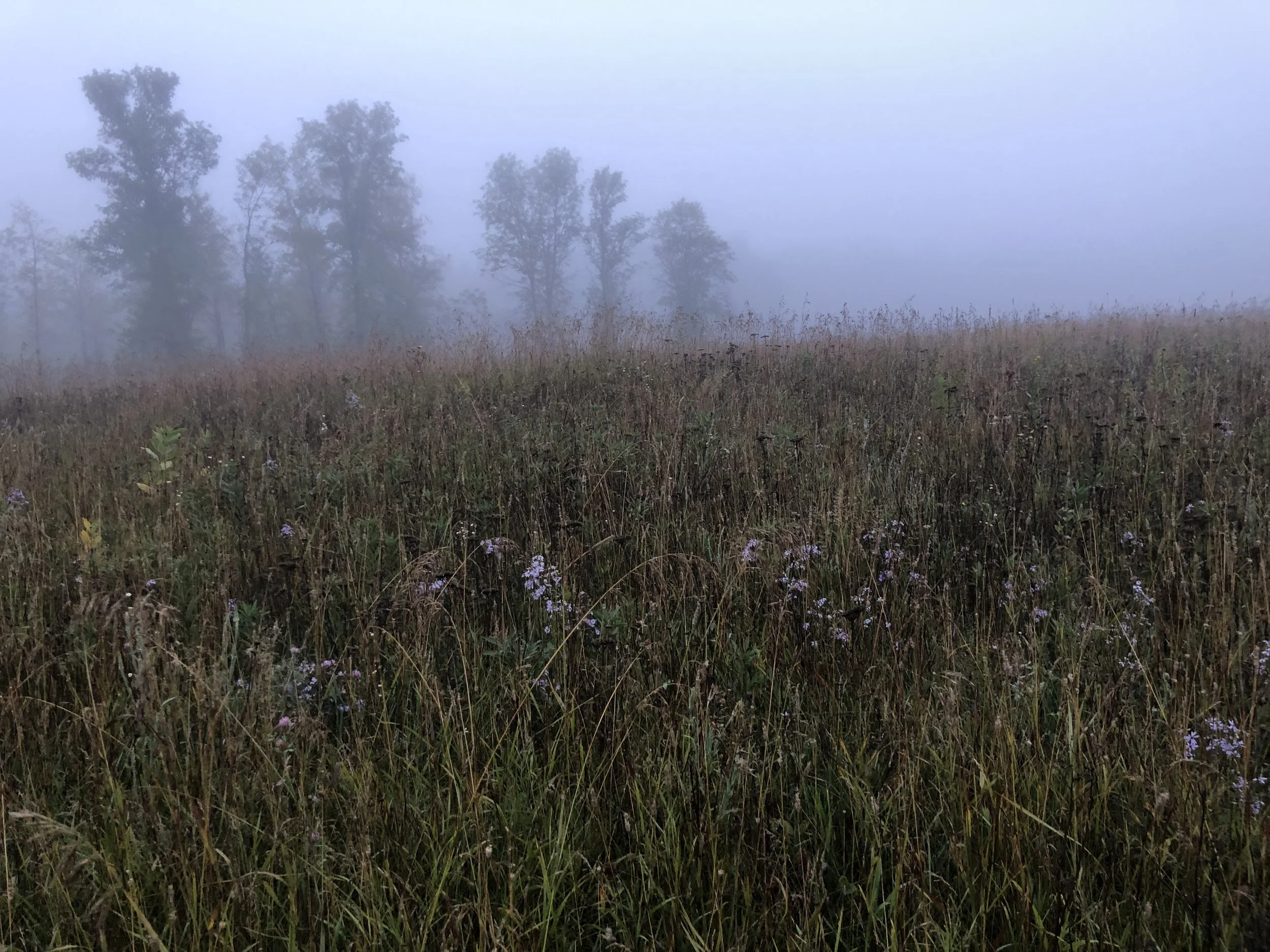
Determined to maintain my paper-making practice, I gazed off into the vast open grassland, and I decided it was time to attempt processing my own plant fibers to make paper.
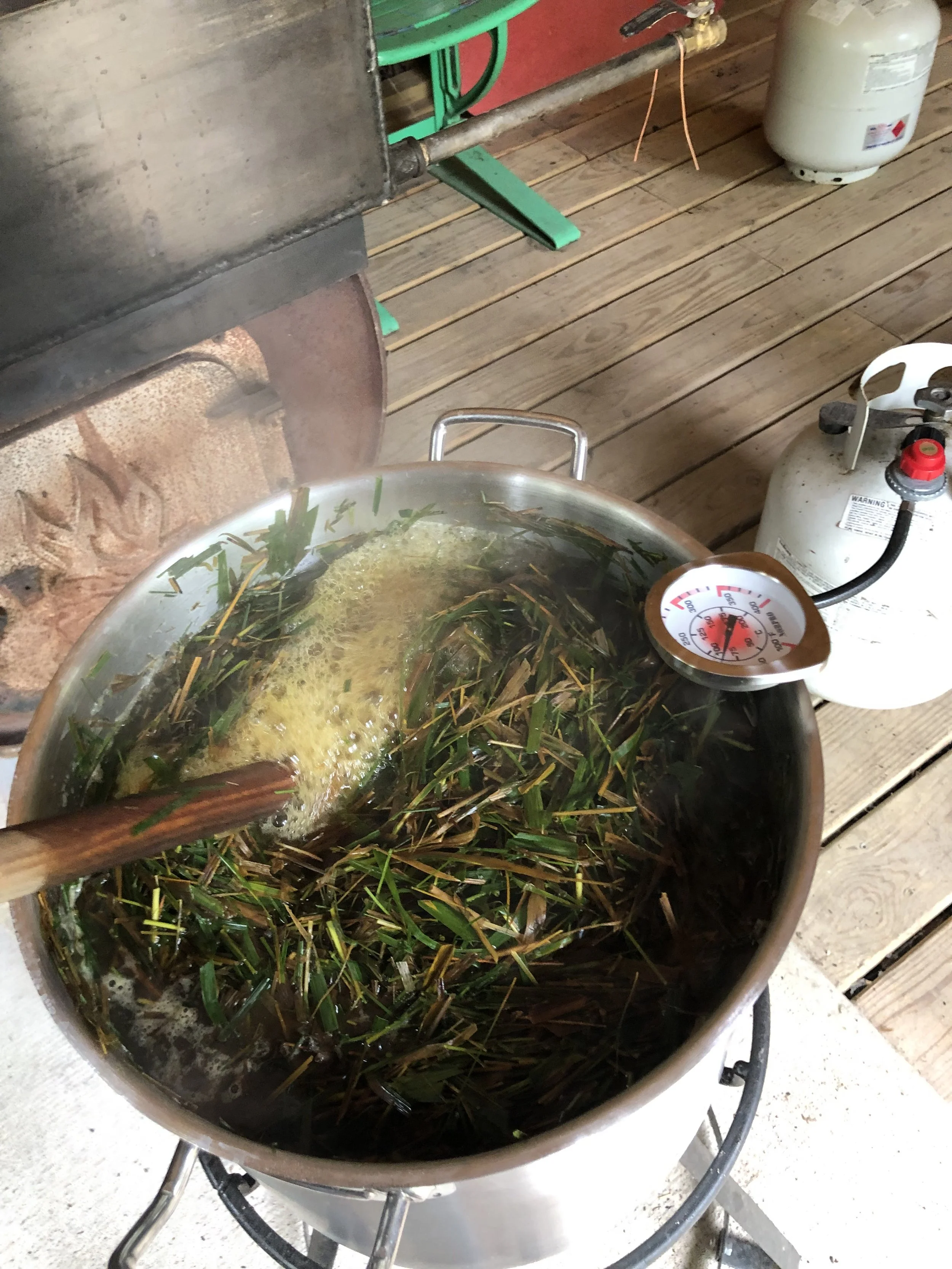
It took days. First, I harvested the grass with my grampa. I sat with my shears and cut the grass into halves and halves and dropped them into a bucket. Next, I boiled the matter in a big vat, with baking soda to break it down. I did it in the sugar shack, which is usually used for producing maple syrup in the spring.
I didn't want to put my plant matter directly into the blender, which is a common at-home paper-making method. I was worried the fibers would be obliterated, cut too short. So I put my grandmother to work with a mallet and a butcher's block.
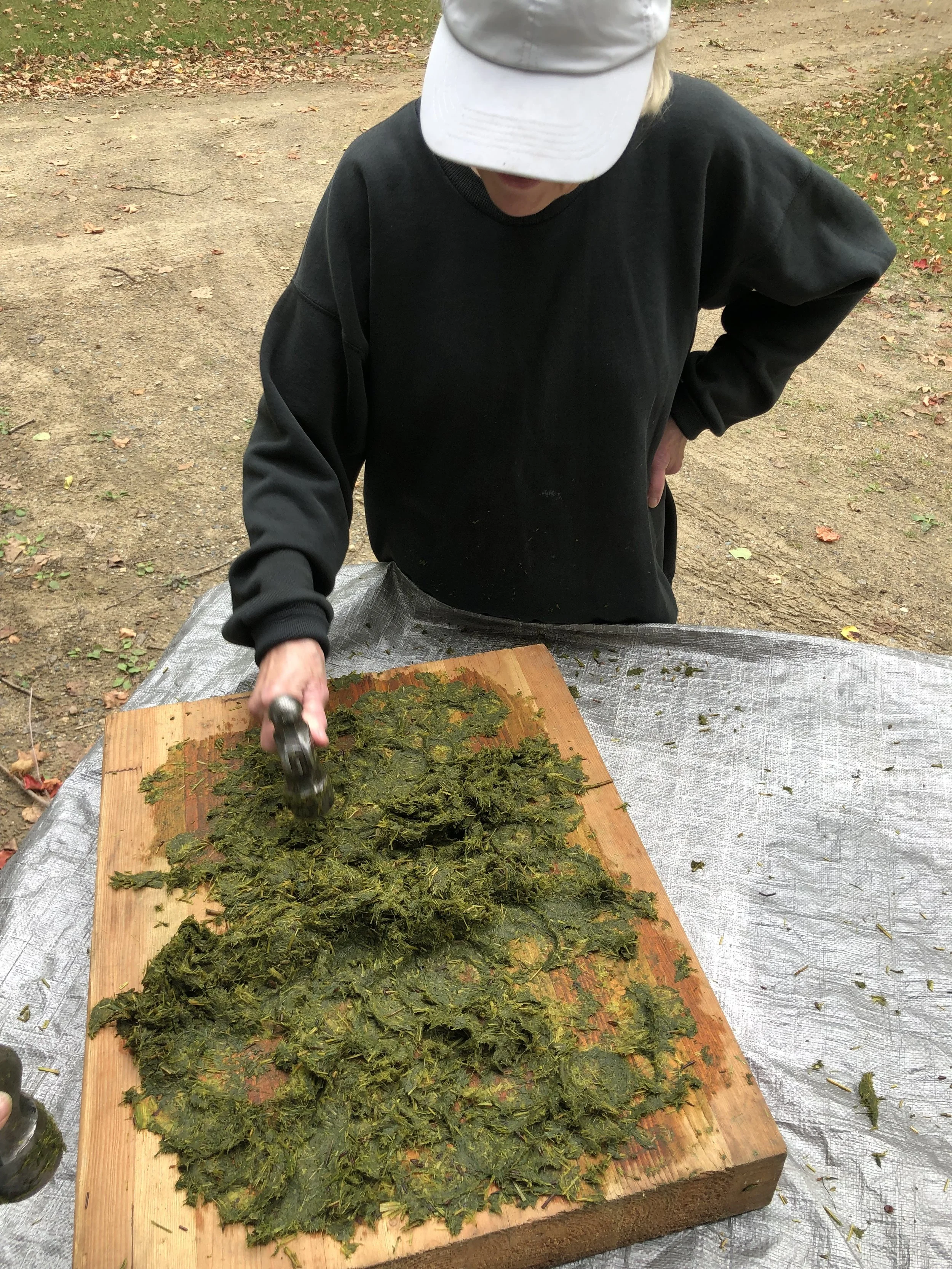
It worked a little, but not so much. I finally resorted to the blender after all…
Leading family members through a labor-intensive, experimental, and possibly fruitless process is hard. My favorite quote from my very helpful grampa: “She just wants to do it all her way.” Things were looking bleak.

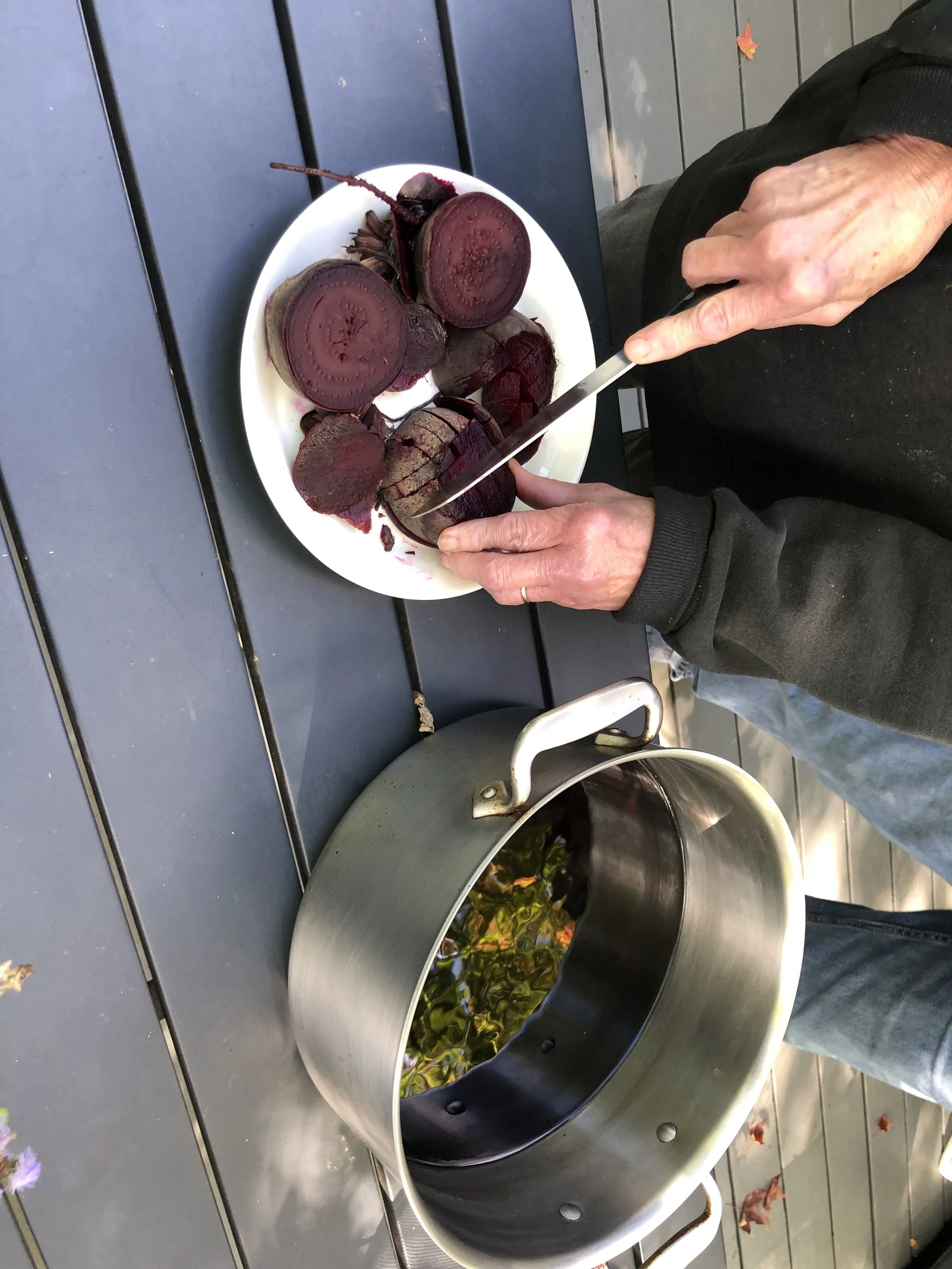
While I was blending away, my MorMor was preparing some juicy red beets. We decided to make things interesting and use the beet water to add a special hue to the paper.
We also boiled okra from the freezer aisle of the grocery store. I read that it is used as a bonding agent, like glue. I added this to my vat.
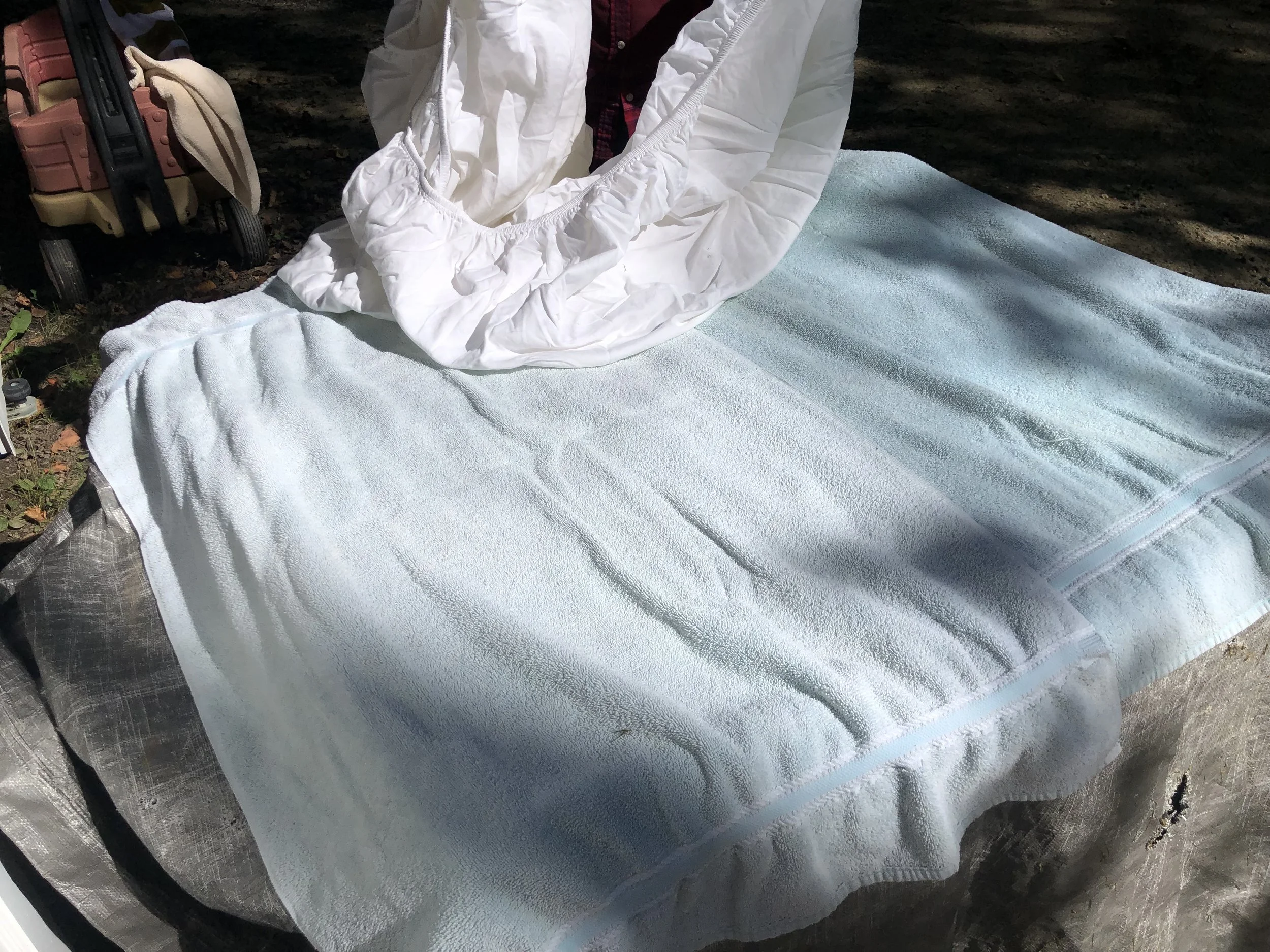
Once all my chemistry projects were complete, I prepared a bed to lay my paper on to dry—towels to soak up the water, and a sheet for the paper to sit on.

I pulled the sheets off the soaked towels, and laid them out in the warm autumn sun. The beet juice did not hold bond to the fibers; it rinsed through.
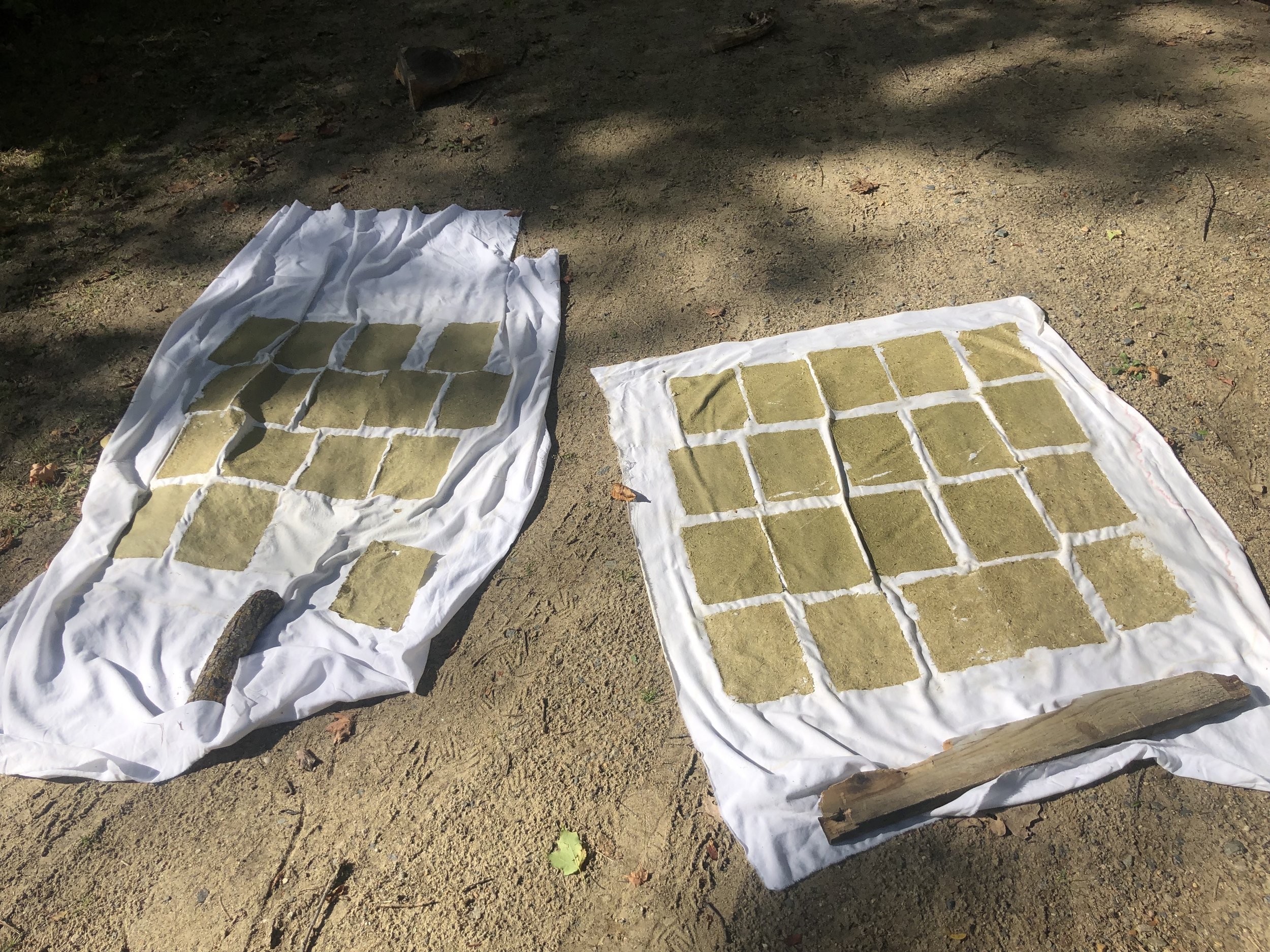
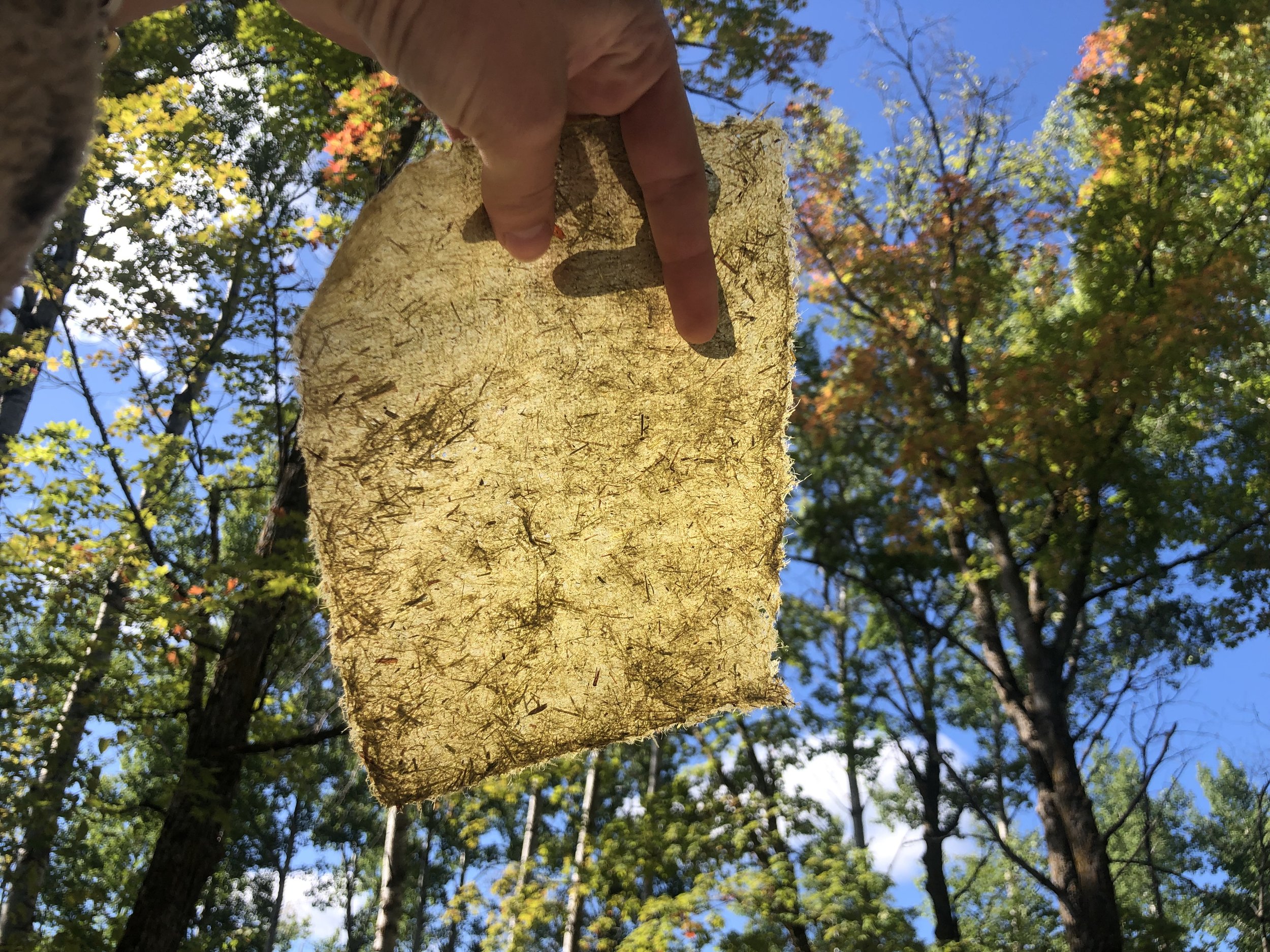
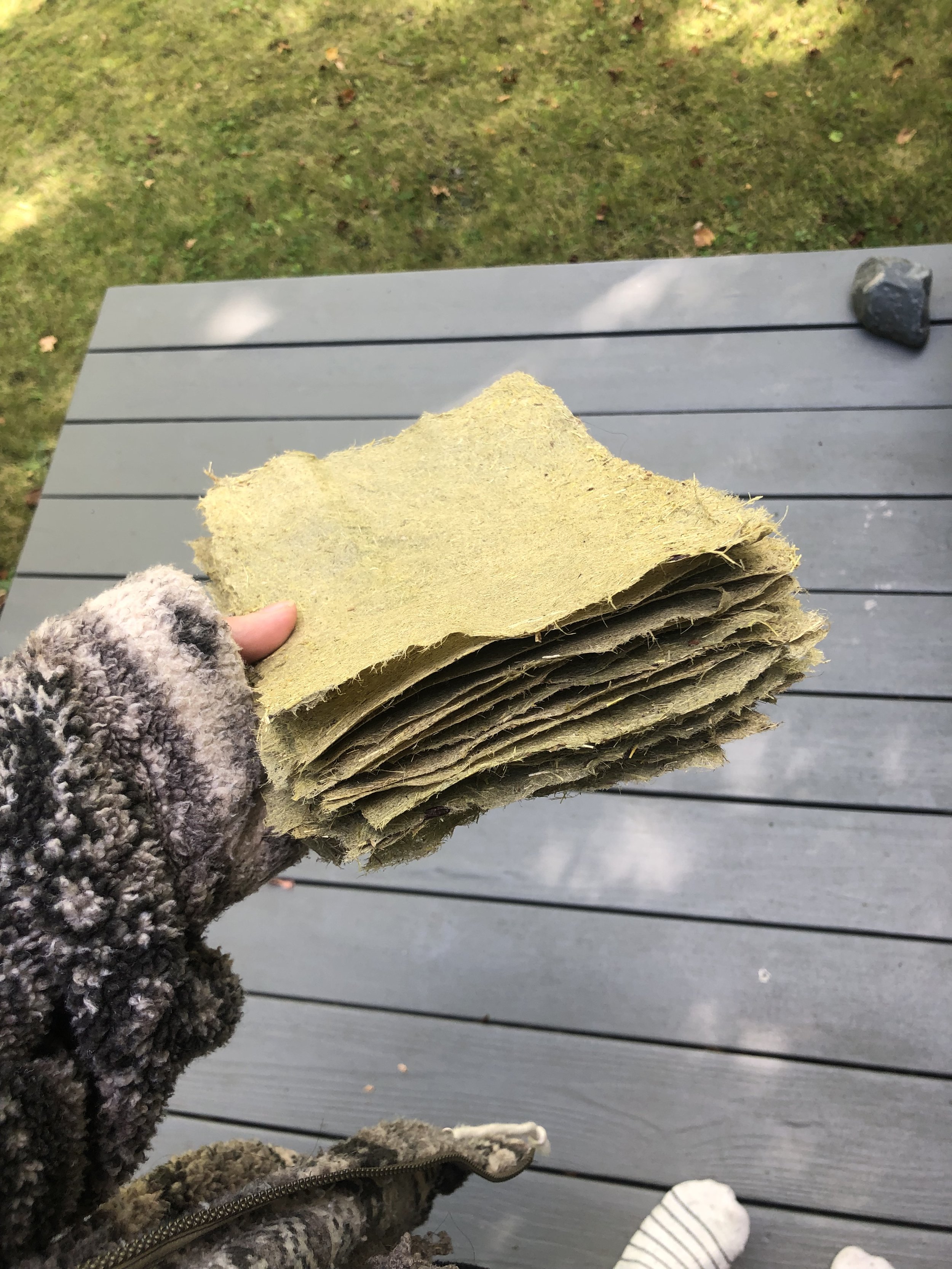
As the sheets dried and the corners lifted of the bedsheet, I carefully peeled them off one at a time and held them up to the sun.